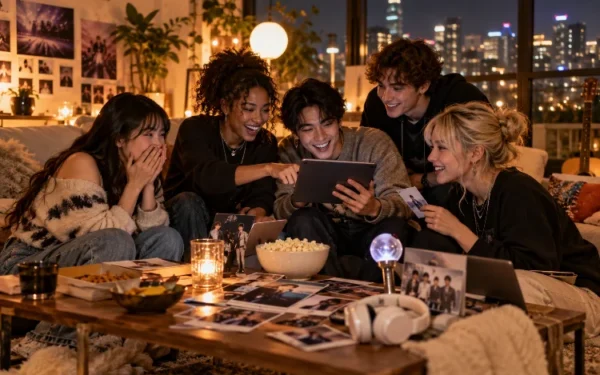
How Celebrity Collaborations Influence Global Entertainment Trends
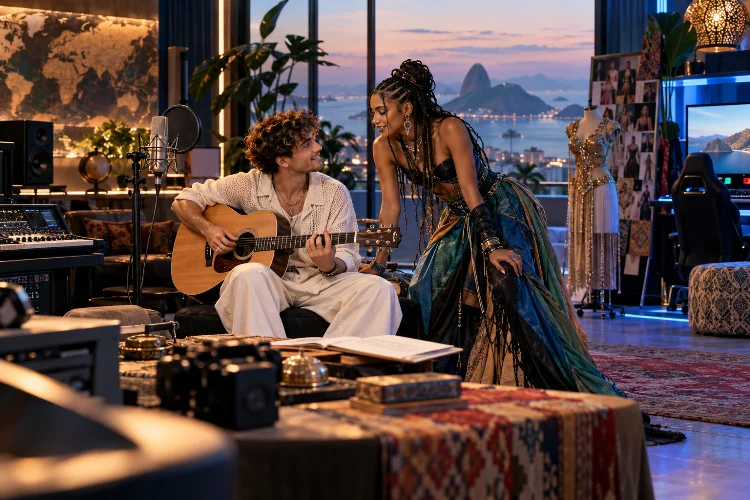
A collaboration between two celebrities used to feel like a special event. Today, it can become something much bigger: a global cultural moment that connects different countries, fan communities, industries, and digital platforms almost overnight.
A K-pop artist can record with an American pop star. A musician can appear inside a video game.
An actor can become the face of an international fashion house, while athletes, influencers, and designers increasingly cross into entertainment spaces that once seemed completely separate.
This is why celebrity collaborations influence global entertainment trends far beyond the success of a single song, movie, or advertising campaign.
The right partnership can introduce artists to completely new audiences, combine cultural influences, create viral conversations, and even change what brands consider commercially valuable.
Streaming and social media have made these collaborations especially powerful because fans no longer need to live in the same country – or even speak the same language – to participate.
Modern entertainment is increasingly connected, and collaborations are one of the fastest ways those connections are created.
Collaborations Create Bridges Between Different Audiences
The simplest reason celebrity collaborations work is audience sharing.
When two famous people work together, each brings an existing fan base. Some followers may already know both celebrities, but many will discover someone new through the partnership.
This can be especially powerful when the artists come from different countries.
Spotify for Artists found that almost 84% of streams for international collaborations in its study came from outside the main artist’s home country. For tracks involving only one main artist, the figure was below 60%.
That difference shows why cross-border partnerships have become such an attractive strategy.
A Latin artist collaborating with a European producer or a Korean singer working with an American performer can immediately gain exposure in markets that might otherwise take years to develop.
The collaboration essentially becomes a cultural introduction.
Fans arrive because they recognize one name, but they may leave following both.
Cross-Cultural Music Collaborations Can Create Global Hits
Music provides some of the clearest examples of this effect.
ROSÉ and Bruno Mars’ “APT.” combined the global reach of a BLACKPINK member with one of America’s most recognizable pop performers.
The song went on to spend multiple weeks at No. 1 on both the Billboard Global 200 and Global Excl. U.S. charts, which measure streaming and sales activity across more than 200 territories.
Part of its appeal came from how naturally different cultural references were combined.
The song takes inspiration from a Korean drinking game while presenting it through an energetic pop-rock sound that works easily across international markets.
That kind of crossover is increasingly normal.
Listeners are becoming comfortable hearing different languages, musical traditions, and regional influences within mainstream releases. Collaboration helps accelerate that process because familiar celebrities give audiences an entry point into something less familiar.
It also creates enormous online visiblity when two fandoms begin sharing clips, memes, performances, and reactions simultaneously.
Unexpected Pairings Generate Attention
Not every successful collaboration needs to cross national borders.
Sometimes the surprise itself is the marketing advantage.
Lady Gaga and Bruno Mars joining forces on “Die With A Smile” worked partly because both artists already had strong identities, yet audiences had not become used to hearing them together.
The collaboration became a major success and won Best Pop Duo/Group Performance at the 2025 Grammy Awards.
These pairings can create something individual promotional campaigns struggle to achieve: genuine curiosity.
Fans immediately want to know what the combination sounds like.
This is why collaborations involving different genres, generations, or creative styles often attract attention before the finished project is even released.
The most succesful examples do more than place two famous names together. They find a creative reason for those personalities to interact.
Without that chemistry, the project can feel more like marketing than art.
Fashion Collaborations Turn Musicians Into Global Style Influencers
Celebrity partnerships also influence trends outside music.
Fashion has become particularly dependent on entertainment personalities who can communicate with audiences across multiple markets at once.
BLACKPINK demonstrates this clearly.
Vogue Business reported in 2025 that the group’s members had a combined reach of more than 412 million followers across their group and individual Instagram pages, alongside more than 151 million combined TikTok followers.
Members have developed relationships with major luxury houses including Chanel, Dior, Saint Laurent, Tiffany, and Bvlgari.
These relationships benefit both sides.
The celebrity gains fashion credibility and international visibility, while the fashion company receives immediate access to enormous digital fan communities.
A handbag, dress, pair of sunglasses, or shoes can suddenly become part of global pop culture simply because the right performer wears it.
This has helped change the traditional idea of a fashion ambassador.
Hollywood actors once dominated international luxury campaigns. Today, fashion companies increasingly work with musicians, K-pop idols, athletes, digital creators, and celebrities whose influence moves effortlessly across borders and platforms.
Fan Communities Multiply the Impact of a Collaboration
Celebrity partnerships become particularly powerful when fandoms participate.
Imagine two artists announcing a collaboration.
Immediately, fan accounts begin translating interviews, creating edits, discussing theories, replaying teasers, comparing previous work, and introducing one celebrity to followers who primarily know the other.
Most of that promotion is not purchased advertising.
It happens because audiences want to participate in the moment.
This creates a kind of decentralized global marketing network.
A collaboration between two celebrities is therefore often also a collaberation between two fan cultures.
That can increase streaming, social media engagement, merchandise interest, and media coverage simultaneously.
The effect becomes even larger when platforms such as TikTok, YouTube, Instagram, and Spotify allow the same project to circulate in different forms.
One person hears the song through a playlist. Someone else discovers it from a dance trend. Another watches an interview clip before eventually becoming a fan.
Global entertainment trends now spread through these overlapping pathways.
Celebrity Collaborations Are Expanding Into Gaming
One of the biggest changes in modern entertainment is that collaboration no longer needs to produce a traditional movie, album, or advertisement.
It can create an experience.
Fortnite has repeatedly partnered with musicians to blend gaming, music, fashion, and virtual events. In 2024, Epic Games built an entire Fortnite Battle Royale season around artists including Snoop Dogg, Eminem, Ice Spice, and Juice WRLD. Snoop Dogg was also featured as a Fortnite Festival Music Icon.
This kind of partnership changes how younger audiences interact with celebrities.
Instead of simply watching a performance, players can enter a digital environment connected to the artist, use themed cosmetic items, hear music while playing, and share the experience with friends.
Epic has previously described music as a way of bringing millions of Fortnite players together and has created interactive performances featuring artists from several countries.
The boundaries between gaming and entertainment are becoming increasingly difficult to separate.
For celebrities, that creates another place to build cultural relevance.
Collaborations Help Celebrities Reposition Their Careers
A partnership can also change how the public understands a celebrity.
An artist associated with one genre can collaborate with someone from a completely different musical world. An actor can work with a fashion label. A musician can appear in a major television series or game.
Each project introduces a new layer to the celebrity’s identity.
This can be especially useful for artists trying to enter a new market or avoid becoming trapped by one successful image.
BLACKPINK’s members, for example, have expanded individually into fashion, acting, solo music, and luxury partnerships while still benefiting from the group’s global identity. Vogue Business describes this individuality as an important part of their wider international influence.
A strategically chosen collaboration therefore does not only generate short-term publicity.
It can influence the next stage of an entire career.
Global Collaboration Reflects a More Connected Entertainment Market
The rise of celebrity partnerships is also connected to the growth of global digital entertainment.
IFPI reported that worldwide recorded music revenue reached $31.7 billion in 2025, with every region experiencing growth. Paid streaming remained a major driver, supported by 837 million paid subscription accounts globally.
Streaming platforms make international discovery significantly easier.
A release does not need separate physical distribution in dozens of countries before fans can hear it. Once available digitally, the same collaboration can reach Jakarta, London, Seoul, São Paulo, and Los Angeles almost simultaneously.
Social platforms add another layer.
Fans in different countries can participate in the same trend within minutes of each other.
This helps explain why global entertainment increasingly feels less divided into isolated regional markets.
Local culture still matters, but trends now travel across borders much more rapidley.
Not Every Celebrity Collaboration Works
Famous names alone do not guarantee success.
Audiences can usually tell when a partnership exists only because someone expects it to generate attention.
A collaboration may fail when the personalities have little creative chemistry, the audiences do not overlap naturally, or the project feels disconnected from what either celebrity normally represents.
Brand collaborations face the same problem.
An entertainer promoting a product with no obvious connection to their lifestyle or public identity may look transactional rather than believable.
Overexposure creates another risk.
When celebrities collaborate constantly, the sense of occasion disappears. What once felt exciting can begin to feel predictable.
The strongest partnerships usually offer something audiences could not easily get from either participant alone.
That might mean a new musical style, an unexpected visual concept, access to another culture, or a completely different entertainment format.
The names attract attention. The creative idea keeps it.
Celebrity collaborations have become one of the most influential forces shaping global entertainment.
They connect fan bases, introduce audiences to different cultures, create new music and fashion trends, expand careers, and increasingly blur the boundaries between industries such as gaming, film, music, and luxury fashion.
Digital platforms have made those partnerships even more powerful by allowing a single project to travel globally almost instantly.
But celebrity power alone is not enough. The collaborations that last are usually the ones where the creative connection feels meaningful rather than manufactured.
Next time a major celebrity partnership appears on your feed, look beyond the famous names. Notice which audiences, cultures, platforms, and industries are being connected. That combination may reveal where global entertainment is heading next.
Ralated Posts