

How Music Streaming Platforms Measure Listener Engagement Patterns
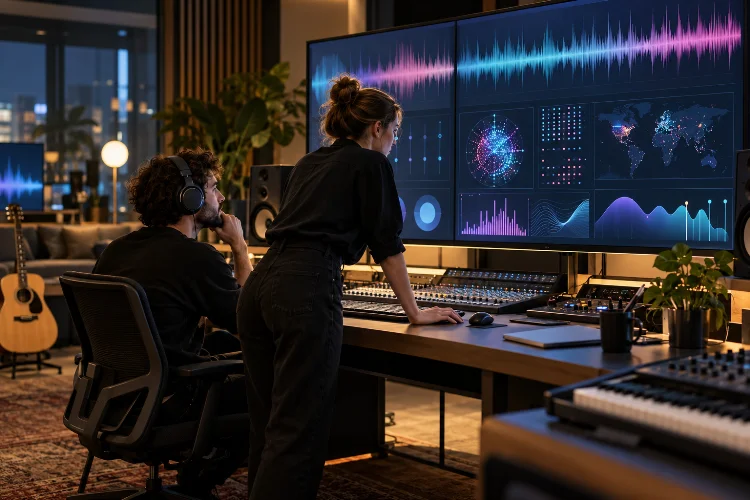
A million streams sounds impressive, but that number alone does not tell you whether people actually care about an artist.
Did listeners search for the song themselves? Did they play it repeatedly? Did they return a week later, save the music, follow the artist, or simply hear it once inside an automated playlist?
These questions explain why music streaming platforms measure listener engagement patterns using much more than basic play counts.
Modern services can examine unique listeners, repeat activity, listening sources, playlist behavior, audience retention, location, watch time, and other forms of interaction.
Artists then receive portions of that information through analytics dashboards such as Spotify for Artists, Apple Music for Artists, and YouTube Analytics for Artists.
The stakes are significant because streaming now dominates recorded music. IFPI reported that streaming accounted for 69.6% of global recorded music revenue in 2025, while paid subscription accounts reached 837 million users worldwide.
Understanding engagement data therefore helps explain not only how platforms measure popularity, but how artists learn whether casual listeners are becoming genuine fans.
Streaming Platforms Measure More Than Raw Plays
The easiest music metric to understand is a play or stream.
However, even that definition can vary between platforms.
Apple Music records a Play when someone initiates a song and listens for more than 30 seconds. Apple Music for Artists also reports average daily listeners, Shazam activity, purchases, radio spins, playlist performance, and geographical trends.
YouTube measures music differently because video behavior matters alongside audio consumption. Analytics for Artists includes views, engaged views, total watch time, unique viewers, returning viewers, traffic sources, Shorts activity, and fan-created videos using an artist’s music.
This highlights an important point: engagement is multidimensional.
A listener who plays a song once is valuable, but someone who returns repeatedly or intentionally searches for the artist may represent a much deeper connection.
Unique Listeners and Repeat Plays Reveal Different Things
Streams and listeners are not interchangeable metrics.
Imagine one song receives 10,000 streams from 9,000 people. Another gets 10,000 streams from only 2,000 people.
The total stream count is identical, but the listening pattern is completely different.
The first song has broader reach. The second may have much stronger repeat engagement.
Spotify for Artists allows teams to compare streams, listeners, and streams per listener while also identifying where those plays originated.
Repeat Listening Can Signal Stronger Interest
Repeated listening can be especially valuable because it suggests the music has moved beyond one-time discovery.
Spotify now groups monthly active listeners according to intentional streaming frequency. Light listeners intentionally stream an artist once or twice within 28 days, moderate listeners do so three to 14 times, while super listeners intentionally stream 15 times or more.
That distinction gives artist teams a much better picture than a single monthly-listener number.
The real question becomes not just “How many people arrived?” but “How many cared enough to come back?”
Listening Source Helps Separate Discovery From Intent
Where someone hears music can be almost as important as the stream itself.
Spotify separates listening sources into active and programmed activity.
Active sources include places where users intentionally choose an artist, such as artist profiles, album pages, their own playlists, saved music, or manually created queues.
Programmed sources include editorial playlists, personalized recommendations, Discover Weekly, Radio, Autoplay, AI DJ, and playlists created by other users.
Consider two listeners.
One hears your song because an algorithm places it between other tracks. The second hears the song, likes it, opens your profile, and starts your album.
Both generate streams, but the second listener displays much stronger intent.
This is why modern analytics increasingly tries to measure the journey from discovery to active fandom rather than treating every stream as identical.
Platforms Look for Signs That Casual Listeners Become Fans
One of the most useful developments in streaming analytics is audience segmentation.
Spotify divides its total audience into monthly active listeners, previously active listeners, and programmed listeners.
Monthly active listeners have intentionally played the artist during the previous 28 days, while programmed listeners have only encountered the music through programmed sources.
That distinction can reveal whether playlist exposure is producing long-term value.
Spotify says listeners who actively stream an artist tend, on average, to play that artist four times more frequently during the following six months.
Its data also indicates that following matters: after someone follows an artist, they are on average three times more likely to stream that artist during the next six months.
Those figures show why raw reach is only the beginning.
An artist may experience huge temporary visiblity from a playlist, but the stronger signal is whether those listeners eventually seek out the music themselves.
Watch Time Adds Another Layer on YouTube
Music engagement becomes even more interesting on YouTube because listeners often behave as viewers too.
A simple view does not reveal whether someone watched for a few moments or stayed deeply engaged.
YouTube therefore measures watch time alongside views, unique viewers, returning viewers, impressions, traffic sources, likes, subscriber activity, and other interactions. It also tracks Engaged Views, which distinguish people who continue watching beyond the initial seconds.
For artists, this can reveal completely different engagement patterns.
A music video might receive fewer views than another upload but generate much longer viewing sessions. A live performance might attract a smaller audience while producing more returning viewers.
YouTube’s fan analytics goes even further by identifying Fans and Top Fans based on total watch time over a recent period.
That allows artists to examine depth instead of simply chasing the largest possible number.
Geographic and Discovery Data Explain Where Momentum Starts
Engagement data is also about location.
Apple Music for Artists allows artists to compare Plays, Listeners, Shazam Count, purchases, radio spins, and other activity across countries, regions, and cities.
Shazam provides another particularly useful discovery signal.
If someone hears an unfamiliar song in a café, club, television show, or public space and actively identifies it through Shazam, that indicates curiosity before a normal streaming relationship has even started.
Apple lets artist teams examine where those Shazams happen and whether songs are charting in particular locations.
Imagine an independent artist suddenly receiving unusually high Shazam activity in Manila while their normal audience is concentrated in London.
That pattern could influence advertising, social campaigns, collaborations, or eventually even touring decisions.
Analytics therefore transforms listening from an abstract global number into identifiable pockets of audience behavour.
Engagement Patterns Influence Artist Strategy
Artists do not receive every piece of data a streaming company possesses, and platforms do not publicly disclose the precise weighting of every recommendation signal.
Still, the analytics they provide can reveal enough to change release strategies.
Suppose a new single gets strong playlist exposure but very little intentional listening afterward. That might suggest broad discovery without strong conversion.
Another track might initially generate fewer streams but produce higher repeat listening, more followers, stronger active-audience growth, and rising activity in several cities.
The second song could have greater long-term potential.
Artists can also compare new releases against previous projects, examine where listeners discover songs, and identify which audience groups remain active over time. Spotify’s audience segmentation specifically tracks movement between new, programmed, previously active, and active listeners.
This makes analytics useful for everything from marketing campaigns to tour planning.
The key is avoiding one common mistake: treating data as an instruction manual for creativity.
Metrics can show what happened. They cannot always explain why people emotionally connected with a song.
Engagement Is Ultimately About Relationships, Not Numbers
Streaming analytics has become incredibly detailed, but numbers still represent human behavior.
A repeat stream may mean someone loves the chorus. A Shazam might represent a person hearing an artist for the first time. A playlist save could be the beginning of years of fandom.
Artists therefore benefit from looking at combinations of signals rather than obsessing over one metric.
Large reach with weak repeat engagement means something different from modest reach with strong retention. Likewise, programmed discovery followed by intentional listening can indicate that recommendation systems are successfully creating new fans.
The most useful interpritation comes from understanding how these metrics connect.
A stream shows consumption. Repeat listening suggests interest. Active listening signals intention. Returning behavior suggests loyalty.
That progression is far more meaningful than simply watching one number increase repetedly.
Music streaming platforms measure listener engagement through a growing mix of plays, unique listeners, repeat activity, listening sources, watch time, follows, geographic trends, Shazam activity, and audience retention.
Together, these metrics help separate temporary exposure from genuine fan development.
For artists, the smartest approach is not to obsess over a single stream count. Instead, look at the full journey: where listeners discovered the music, whether they returned, whether they intentionally searched for more, and where engagement is growing.
Next time you see an artist celebrating millions of streams, remember that the bigger story may be hidden behind the headline number. In digital music, knowing how people listen can be just as important as knowing how many people pressed play.