Best Mobile Gaming Trends Developers and Players Should Watch
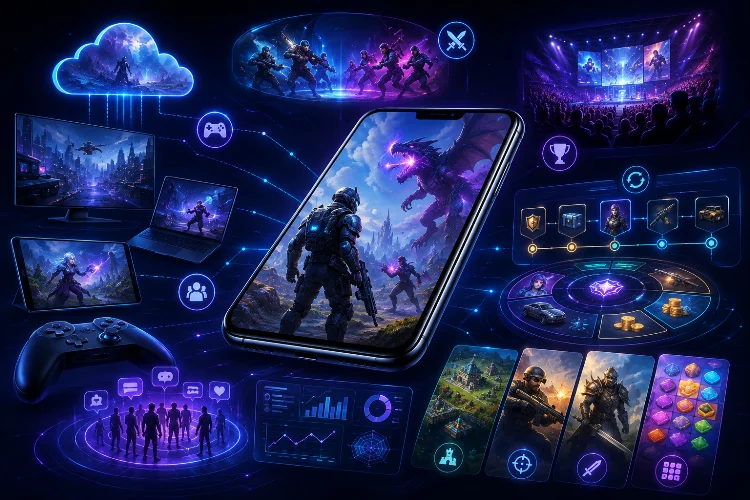
Mobile gaming is one of those industries that seems to reinvent itself every few years. First came simple touchscreen games, then free-to-play titles, competitive multiplayer, battle passes, sophisticated 3D graphics, and enormous live-service communities.
Now another transformation is happening.
Studios are becoming more selective about how they attract players, while gamers expect better quality without sacrificing the convenience that made mobile gaming popular in the first place.
Understanding the Best Mobile Gaming trends therefore means looking beyond which games happen to be popular today. It means examining how developers build games, how they retain players, where revenue comes from, and how smartphones are becoming connected to the wider gaming ecosystem.
Here are the trends shaping that transition.
1. Retention Matters More Than Chasing Downloads
For years, download numbers were one of the easiest ways to describe mobile gaming success.
That metric still matters, but developers increasingly care about what happens after installation.
Sensor Tower’s State of Mobile 2026 describes mobile gaming as moving from scale toward efficiency, with studios placing more focus on stronger monetisation, disciplined LiveOps, and better economics as user-acquisition costs remain challenging.
In practical terms, one loyal player who remains active for a year can be far more valuable than several users who install a game and delete it the next day.
That is why onboarding, daily rewards, progression systems, regular events, and personalised offers have become such important parts of mobile game design.
2. LiveOps Is Turning Games Into Ongoing Entertainment
The traditional gaming model was relatively simple: developers made a game, released it, fixed a few bugs, and eventually began working on the sequel.
Mobile changed that formula.
Many successful games now operate more like ongoing entertainment platforms. Developers continuously release events, challenges, characters, cosmetics, story chapters, and seasonal content.
Unity has documented this shift extensively, highlighting LiveOps as a major strategy for keeping existing communities active after release.
A well-run seasonal event can reactivate players who have not opened the game for weeks. New challenges can also give experienced users something to pursue after completing the original content.
The result is a much longer relationship between developer and player.
3. Hybrid-Casual Games Are Replacing Simple Hyper-Casual Models
Hyper-casual games became famous because they were extremely easy to understand. Players could often learn the core mechanic within seconds.
The downside was equally clear: many players quickly became bored.
Hybrid-casual games try to solve that problem by keeping the simple controls while adding deeper progression. A basic puzzle game might include collectible characters, upgrades, events, competitive rankings, or base-building mechanics.
Unity identified hybrid-casual monetisation and greater user-level customisation as important directions for the mobile market, with developers blending traditionally separate monetisation and gameplay approaches.
This approach gives studios the accessibility of casual gaming while creating reasons for players to stay longer.
4. Monetisation Is Becoming More Personalised
Advertising is not disappearing from mobile games, and neither are in-app purchases. Instead, developers are combining them more intelligently.
AppsFlyer’s monetisation research shows hybrid models becoming increasingly common as developers layer advertising and purchasing opportunities rather than relying exclusively on one method.
Imagine two players enjoying exactly the same game.
One prefers to play completely free and does not mind watching optional rewarded videos. Another dislikes advertising but happily pays for a starter pack or battle pass.
A flexible system can accommodate both.
This is one reason personalised monetisation may become an important competitive advantage. The most sustainable approach is not necessarily to maximise spending immediately, but to match offers to different types of players without damaging the experience.
5. AI Is Changing How Mobile Games Are Marketed
Mobile gaming has always been competitive, but getting noticed is becoming particularly difficult.
Thousands of games compete for attention across social media platforms, advertising networks, app stores, influencers, and video channels.
Artificial intelligence is allowing marketing teams to create and test significantly more advertising concepts. AppsFlyer’s State of Gaming for Marketers 2026 notes that AI-driven creative production is increasing rapidly, while competition for attention is becoming more intense.
Developers can now experiment with different videos, artwork, headlines, gameplay clips, and audience segments faster than before.
However, higher creative volume creates a new challenge. When everybody can produce more advertisements, originality becomes even more important.
6. Cross-Device Gaming Is Expanding the Mobile Audience
The line separating mobile games from PC games is becoming harder to see.
Google Play Games on PC is one major example. Google announced in 2025 that its PC gaming platform would expand its catalogue and make it easier for developers to reach players across Android and Windows environments.
By the end of 2025, Google said Play Games on PC had reached general availability as part of its broader cross-platform strategy.
Apple is building a similar connected gaming environment. Its Apple Games app gives users one place to discover games, follow activity, interact with friends, and return to titles they already play.
This means a successful mobile game no longer needs to remain strictly mobile.
7. Performance Is Becoming a Competitive Feature
Players increasingly notice technical quality.
Long loading screens, overheating, unstable frame rates, excessive battery use, and crashes can quickly push someone toward another game.
Google’s recent Android gaming initiatives include expanded Vulkan support and improvements to its Android Dynamic Performance Framework, which helps games adjust performance according to a device’s thermal conditions.
This is especially important because Android games need to work across devices ranging from affordable smartphones to premium gaming phones.
The Best Mobile Gaming experiences therefore depend on optimisation as much as graphical ambition.
A beautiful game that overheats a phone after ten minutes is less impressive than one that looks good and runs smoothly for an hour.
8. Social Features Are Becoming Part of Core Game Design
Mobile games are also becoming more social.
Clans, cooperative events, PvP leagues, friend challenges, multiplayer missions, leaderboards, and shared rewards can turn a game into a community.
Google has been expanding Play Games Services with achievements, personalised experiences, and engagement tools designed to help developers retain players. The company says Play Games Services connects into an ecosystem serving more than two billion monthly active players.
These systems demonstrate why social gaming matters.
People may originally install a game because its advertisement looks interesting, but friends and communities can give them a much stronger reason to keep playing.
Mobile gaming is entering a phase where quality, retention, community, and flexibility matter more than simply generating huge installation numbers.
Hybrid monetisation gives players more choice. LiveOps keeps games fresh. AI helps developers test new ideas faster, while better mobile hardware and cross-platform ecosystems are expanding what smartphones can deliver.
The most important Best Mobile Gaming trends all point toward the same future: games that are easier to access but much deeper once players become invested.
Whether you are a developer, marketer, investor, or simply someone who enjoys mobile games, watching these changes can provide a useful preview of where the wider gaming industry is heading next
Ralated Posts