Popular Music Production Since the 1980s: How the Sound Evolved
Listen to a major pop record from 1982 and then jump to a hit released today. The difference is immediately obvious, but it is not simply about changing musical taste.
The tools used to create popular music have completely changed.
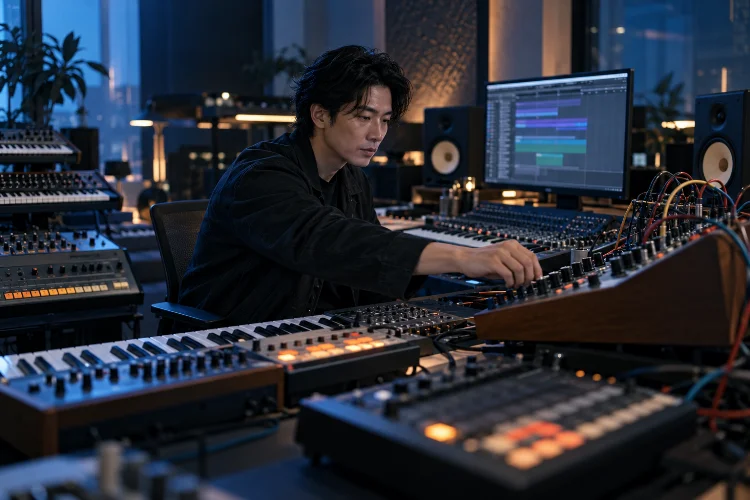
In the early 1980s, producers were experimenting with programmable drum machines, expensive synthesizers, analog consoles, and emerging digital technology.
By the 1990s, sampling and computer-based recording were becoming increasingly important. The 2000s brought powerful software into ordinary studios, while today’s producers can build commercially competitive records almost entirely on laptops.
Exploring popular music production since the 1980s shows how technology gradually changed the meaning of a recording studio.
Producers moved from capturing performances to constructing sounds, editing tiny details, programming rhythms, manipulating vocals, and creating arrangements that might never exist as a traditional live performance.
Yet the story is not simply about machines replacing musicians. Each new tool created different creative possibilities – and musicians repeatedly found ways to use technology that its inventors probably never expected.
The 1980s Made Machines Part of the Band
The early 1980s were a turning point because electronic instruments became central to mainstream production.
Synthesizers had already existed for years, but programmable drum machines and increasingly affordable electronic equipment changed how rhythm sections could be created.
The Roland TR-808 is one of the best examples.
Introduced in 1980, the TR-808 generated its drum sounds electronically rather than reproducing realistic acoustic drums.
Only around 12,000 units were manufactured before production ended, yet its deep kick, synthetic snare, claps, and hi-hats later became fundamental to hip-hop, electro, dance music, R&B, and pop.
Its unrealistic sound became its advantage.
Producers were no longer always trying to imitate a drummer. They could create an entirely different kind of rhythym.
That idea still defines modern production: electronic instruments do not need to sound like traditional ones to be musically useful.
MIDI Changed How Electronic Instruments Worked Together
Another major breakthrough arrived in 1983 with MIDI, or Musical Instrument Digital Interface.
Before MIDI, connecting electronic instruments from different companies could be complicated. MIDI created a shared technical language that allowed synthesizers, sequencers, and later computers to communicate.
At the 1983 NAMM show, a Sequential Circuits Prophet-600 was publicly connected with a Roland Jupiter-6, demonstrating communication between instruments made by different manufacturers.
That development was huge for producers.
A musician could play notes on one keyboard while triggering sounds from another synthesizer. Sequencers could store performances, and producers could modify notes without recording the entire part again.
MIDI also helped turn arrangement into something editable.
A bass line could be moved, duplicated, slowed down, or assigned to a completely different sound after it had been performed.
That workflow would later become standard inside digital audio workstations.
Sampling Changed the Meaning of Musical Raw Material
During the 1980s, sampling introduced another revolutionary idea: an existing recording could become material for a new one.
Early hip-hop producers were especially important in developing sampling as a creative practice.
GRAMMY.com’s history of 1980s hip-hop describes producer Marley Marl as an early innovator in drum programming and sampling, helping establish techniques that became central to later rap production.
By the end of the decade, producers were building increasingly complex arrangements from pieces of older records.
De La Soul’s 1989 album 3 Feet High and Rising, produced with Prince Paul, famously used an unusually broad collection of samples ranging from soul and R&B to Kraftwerk, Steely Dan, Johnny Cash, and even archival spoken audio.
The Library of Congress later added the album to the National Recording Registry.
Sampling changed production conceptually.
A producer could take a tiny drum break, vocal fragment, bass line, or strange sound from one context and transform it into something completely new.
The record collection itself became an instrument.
The 1990s Turned Computers Into Serious Studio Tools
During the 1990s, digital recording increasingly moved from specialized systems into professional production workflows.
One of the biggest developments was the growth of the Digital Audio Workstation, or DAW.
Avid traces commercial DAW development through Digidesign’s SoundTools in the late 1980s, which eventually evolved into Pro Tools and became widely used in professional studios.
DAWs fundamentally changed editing.
With analog tape, cutting and moving recorded material could involve physical edits or complex copying. On a computer, engineers could cut, copy, paste, rearrange, and process audio without permanently damaging the original recording.
Suddenly, timing could be adjusted much more precisely.
A vocalist could record several takes and producers could combine the strongest phrases. Drum performances could be tightened. A chorus could be duplicated without recording it again.
Production became far more accessable and reversible.
If an experiment failed, the producer could simply undo it.
Auto-Tune Turned Correction Into an Artistic Effect
Digital production tools were originally marketed partly as ways to improve recordings.
Artists quickly discovered they could also deliberately abuse them.
Auto-Tune is probably the most famous example.
The software was designed to correct vocal pitch, but Cher’s 1998 hit “Believe” used extreme pitch-processing settings to create an obviously artificial vocal effect. Sound On Sound describes it as the first major commercial recording to use Auto-Tune’s audible artifacts deliberately as a creative effect.
What began as an unusual production trick became a major part of twenty-first-century pop.
Artists such as T-Pain later pushed the sound further, and heavily processed vocals became common across hip-hop, R&B, electronic music, and mainstream pop.
The lesson was similar to what happened with the 808.
A technology designed for one practical purpose became more culturally important when musicians used it “incorrectly.”
Pitch correction was no longer invisible studio maintenance. It could become part of an artist’s identity.
The 2000s Moved More Production Inside the Computer
By the 2000s, the computer had become the center of many studios.
Instead of requiring separate hardware for every task, DAWs could host virtual synthesizers, drum machines, samplers, compressors, reverbs, guitar amplifiers, and countless other plug-ins.
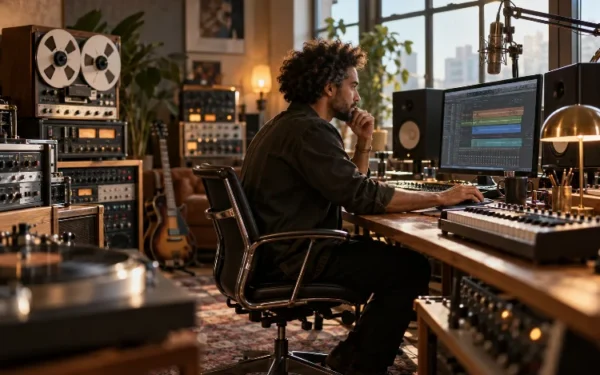
Modern DAWs combine audio recording, MIDI sequencing, editing, mixing, pitch correction, time-stretching, virtual instruments, and effects in the same environment.
This changed studio economics.
A producer no longer necessarily needed racks of expensive equipment to access sophisticated sounds.
Software could imitate classic hardware or create things that physical equipment could not easily do.
It also changed songwriting.
Many contemporary tracks are written and produced simultaneously. A producer may begin with a beat, add chords, move sections around, record temporary vocals, change the tempo, and completely rebuild the arrangement before the song is considered finished.
Writing, recording, editing, and production are no longer always seperately defined stages.
They often happen at the same time.
Bedroom Producers Changed Who Could Make Pop Records
Perhaps the most important shift since the 1980s is accessibility.
A professional studio once required enormous investment in consoles, tape machines, outboard equipment, microphones, instruments, and specially designed rooms.
Today, a laptop, audio interface, microphone, headphones, and software can provide enough equipment to create a professional release.
This does not mean traditional studios are useless.
High-quality rooms, experienced engineers, analog equipment, and professional monitoring remain valuable. But the barrier to starting has dropped dramatically.
A producer can experiment privately for years without renting studio time.
Musicians can also collaborate internationally by sending project files and stems online rather than working in the same building.
This has helped create the modern bedroom-producer culture, where artists can develop distinctive sounds without waiting for a label to finance recording sessions.
The result is more experimentation – and much more music.
Modern Pop Production Blends Every Previous Era
Contemporary production is interesting because older technologies never truly disappeared.
The TR-808 still influences pop and hip-hop decades after its introduction. MIDI remains foundational to electronic production more than forty years after its early demonstrations.
Analog synthesizers, tape machines, vintage microphones, and old samplers continue appearing alongside cutting-edge software.
Modern producers frequently combine all of them.
A track might begin with MIDI-controlled software instruments, use an 808-inspired kick, sample a vinyl record, record vocals through vintage hardware, correct those vocals digitally, and finish the entire mix inside a laptop.
This means production history is not a straight line from “old” to “new.”
It is more like a constantly expanding toolbox.
New technology adds options rather than automatically replacing everything that came before.
That is why contemporary pop can simultaneously sound futuristic and nostalgic.
Production Has Become Part of the Artist’s Identity
Since the 1980s, audiences have also become more aware of production itself.
Listeners recognize an 808 kick. They notice Auto-Tuned vocals, distorted bass, lo-fi textures, enormous reverbs, unusual samples, and deliberately retro synthesizers.
Producers have increasingly become public creative figures rather than invisible technicians.
The sound of a record can now be as recognizable as the singer.
This has changed what “performance” means in popular music.
The person programming drums, manipulating samples, editing vocals, and designing synthesizer sounds may be contributing as much to the musical identity as someone playing a traditional instrument.
Production has moved from behind the song to inside the song.
That shift may be the biggest change of all.
The evolution of popular music production since the 1980s is really a story about expanding creative control.
Drum machines introduced new rhythmic possibilities. MIDI connected electronic instruments. Sampling transformed existing recordings into new musical material, while DAWs made editing dramatically easier.
Auto-Tune turned vocal correction into an artistic language, and laptop-based studios eventually made sophisticated production available to almost anyone.
Yet technology never creates musical movements by itself. Musicians decide what the tools mean.
The next time you hear a modern pop song, listen beyond the melody. Notice the programmed drums, vocal processing, samples, electronic textures, and tiny edits.
Many of those sounds carry decades of production history – and often began as experiemental ideas that eventually became completely normal.