
Cultural Origins of Contemporary Electronic Music: From Clubs to Raves
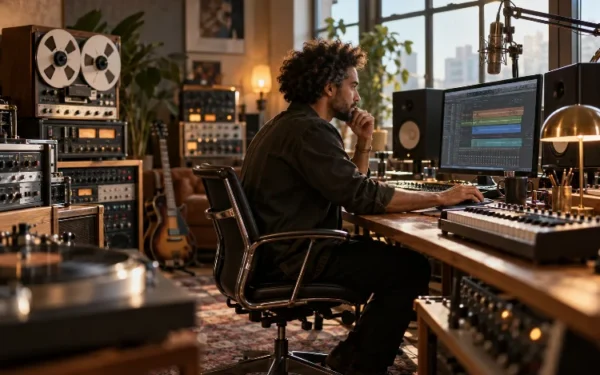
Electronic music can feel incredibly modern. Its world is filled with laptops, synthesizers, massive festival stages, DJ controllers, algorithmic playlists, and production software that can turn a bedroom into a professional studio.
But the culture behind those sounds is much older and more complicated.
Understanding the cultural origins of contemporary electronic music means looking beyond technology.
Modern electronic genres developed through experimental composition, Black and queer club communities, Jamaican sound-system culture, European synthesizer music, post-industrial American cities, and underground rave movements.
House was shaped in Chicago clubs. Techno emerged from Detroit. Dub producers in Jamaica transformed mixing equipment into musical instruments, while British rave scenes later combined influences arriving from both sides of the Atlantic.
None of these traditions developed in complete isolation. DJs, records, migrants, radio stations, clubs, and new machines constantly carried ideas between cities and countries.
Today’s electronic music is therefore less like one invention and more like a huge conversation that has been happening for decades.
Electronic Music Existed Before Dance Clubs
The earliest electronic music was not designed for a nightclub.
During the middle of the twentieth century, composers and engineers were already experimenting with tape machines, electronic tones, recorded environmental sounds, and new methods of manipulating audio.
One influential approach was musique concrète, in which recorded sounds could be edited and transformed into compositions.
Edgard Varèse’s 1958 Poème électronique, for example, combined voices, bells, sirens, electronically generated tones, and other recorded sounds.
At the Brussels World’s Fair, the work was presented through hundreds of loudspeakers positioned throughout the Philips Pavilion.
These early experiments established an important principle: recorded sound itself could become musical material.
That idea would eventually move far beyond academic studios.
Producers in pop, dub, hip-hop, techno, ambient music, and countless other genres would later treat editing, looping, filtering, and sound manipulation as fundamental parts of composition.
Disco Created a Social Foundation for Dance Music
Electronic dance music also owes a huge cultural debt to disco.
During the late 1960s and 1970s, underground dance spaces became important meeting points for communities that were not always welcomed in mainstream nightlife. Black, Latino, queer, and female audiences played major roles in the culture surrounding disco.
Smithsonian’s history of the genre notes that disco brought together electronic music, soul traditions, dance culture, and broader social changes before exploding into mainstream popularity during the 1970s.
The dancefloor itself was important.
A DJ was not simply playing background music. DJs learned to maintain energy, extend particular grooves, blend records, read the crowd, and shape an entire night through sequencing.
That philosophy became essential to almost every form of club-oriented electronic music that followed.
When disco experienced a major backlash near the end of the 1970s, its ideas did not disappear. Much of the culture moved back underground, where new technologies and younger DJs transformed it.
House music would become one of disco’s most important descendants.
Jamaican Dub Changed What a Producer Could Be
At roughly the same time, producers and sound-system operators in Jamaica were developing another revolutionary idea.
They treated the recorded track as something that could be rebuilt.
Jamaican engineers created alternative “versions” of recordings, often removing vocals and emphasizing bass and drums. Producers such as King Tubby then pushed these experiments further with echo, reverb, filtering, dropouts, and dramatic changes made directly on the mixing console.
Red Bull Music Academy’s history of dub describes how multitrack recording, sound systems, dubplates, and King Tubby’s innovative mixing techniques helped establish dub as a studio-created form by the early 1970s.
This was incredibly influencial.
The mixing desk stopped being merely a device for balancing instruments. It could be performed almost like an instrument itself.
That philosophy can still be heard in contemporary electronic production. Drops, bass-heavy mixes, remix culture, delay effects, live mixing, and the idea of completely rebuilding an existing recording all have strong connections to dub.
Sound-system culture would also travel internationally, especially through Caribbean communities in Britain, influencing later UK genres from jungle and drum and bass to garage and dubstep.
Chicago House Grew From Black and Queer Club Culture
If contemporary dance music has one particularly important birthplace, Chicago deserves a major place in the story.
House music developed from Chicago’s underground disco culture during the late 1970s and early 1980s.
The Warehouse became central to this history. Frankie Knuckles, who moved from New York to Chicago in 1977, blended disco, soul, funk, R&B, electronic rhythms, sound effects, and extended mixes for crowds that included many Black and gay dancers.
WTTW’s historical account describes early house clubs as safe spaces where Black and queer audiences could escape racism and homophobia outside the club. It also traces the term “house music” back to the Warehouse itself.
Technology helped shape the sound.
As disco records became harder to find and DJs looked for new material, drum machines, synthesizers, sequencers, and homemade edits increasingly entered performances.
The resulting music was repetitive in the best possible way: designed around the physical experience of dancing.
That four-on-the-floor rhythym became one of the most recognizable foundations in electronic music.
Modern deep house, tech house, progressive house, EDM, and many forms of commercial dance pop still carry pieces of that Chicago DNA.
Kraftwerk Helped Electronic Sound Enter Popular Culture
While American club culture was evolving, European musicians were developing another electronic vocabulary.
Germany’s Kraftwerk became particularly significant.
Formed in Düsseldorf in 1970, the group increasingly built music around synthesizers, drum machines, repetition, technological imagery, and a deliberately mechanical aesthetic.
Their 1974 track and album Autobahn brought an unusually electronic sound to a much broader international audience. GRAMMY’s retrospective notes Kraftwerk’s huge influence across pop, new wave, industrial music, and later electronic dance styles.
Kraftwerk’s influence becomes especially interesting because electronic music history is not a simple Europe-to-America story.
American funk, soul, disco, and Black radio influenced electronic musicians, while European synth records travelled back across the Atlantic and inspired new American producers.
That feedback loop became especially important in Detroit.
Detroit Techno Turned Machines Into Futurism
Detroit techno emerged during the 1980s through a combination of electronic technology, funk, European synth music, local radio, and the social environment of post-industrial Detroit.
Juan Atkins, Derrick May, and Kevin Saunderson – later widely known as the Belleville Three – were central figures.
Atkins absorbed music from both Parliament-Funkadelic and Kraftwerk. Detroit DJ The Electrifying Mojo also played an unusually broad mix of electronic, funk, rock, soul, and experimental music, exposing young listeners to sounds that rarely appeared together on conventional radio.
The result was not simply house music from another city.
Detroit techno developed its own futuristic character.
Synthesizers and drum machines could express both optimism and anxiety about technology, industry, cities, and the future. Later Detroit groups such as Drexciya and Underground Resistance would push electronic music toward even deeper forms of Afrofuturism and cultural identity.
Techno’s international impact grew rapidly in Europe during the late 1980s.
What began in Detroit eventually became part of club cultures from Berlin to Tokyo.
UK Rave Culture Mixed Multiple Musical Traditions
By the late 1980s and early 1990s, Britain became another crucial meeting point.
Acid house, imported American house and techno, Caribbean sound-system traditions, pirate radio, hip-hop breakbeats, and emerging digital production techniques collided inside clubs, warehouses, and illegal raves.
The Victoria and Albert Museum documents acid-house raves at London’s Clink Street in 1988 as part of the early visual and cultural language surrounding British rave.
East London became particularly important.
V&A research describes how warehouses, sound clashes, raves, and pirate radio helped shape scenes that later produced acid house, garage, hardcore, jungle, drum and bass, and eventually grime. Caribbean musical culture was deeply intertwined with that development.
These were not merely new musical genres.
They created communties.
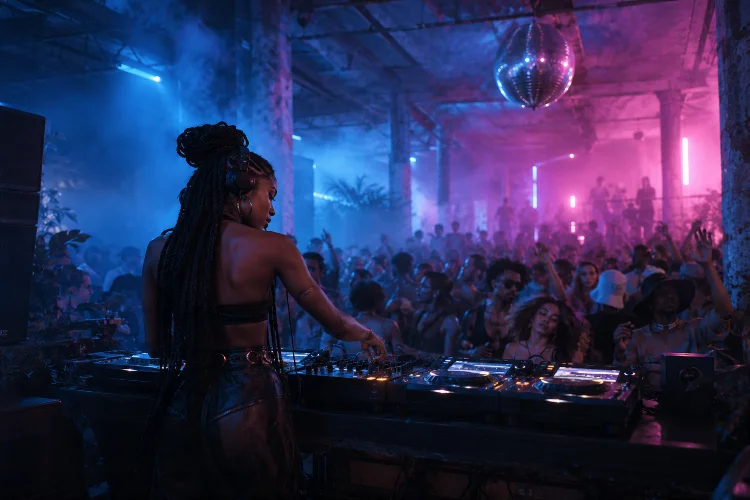
Rave culture developed its own fashion, visual design, flyers, slang, dance styles, venues, radio networks, and ideas about collective experience.
Electronic music increasingly became something you belonged to rather than something you simply listened to.
Electronic Music Has Always Been About Technology and Community
It is tempting to explain electronic music history through machines.
The story certainly includes tape recorders, synthesizers, mixing consoles, drum machines, samplers, sequencers, and eventually laptops.
But machines cannot explain why particular genres developed where they did.
Chicago house was shaped by the people gathering at Black and queer clubs. Detroit techno reflected local Black musical traditions, radio culture, technological imagination, and urban life.
Jamaican dub developed through studios and competitive sound systems. British rave was shaped by warehouses, immigration, pirate radio, and youth subcultures.
Technology provides possibilities.
Culture decides what people do with them.
This also explains why the same drum machine can sound completely different in house, techno, electro, jungle, or contemporary pop.
The equipment may be similar, but the cultural context changes the music.
Contemporary Electronic Music Is a Global Hybrid
Today’s electronic landscape contains hundreds of styles, from techno and house to ambient, drum and bass, dubstep, trance, garage, experimental electronica, and festival EDM.
These genres continue mixing with hip-hop, Afrobeats, Latin music, pop, jazz, regional dance traditions, and countless local scenes.
Digital production has made this exchange faster than ever.
A producer in Indonesia can learn techniques developed in Detroit, use bass ideas connected to Jamaican dub, build rhythms influenced by Chicago, and release the track globally from a laptop.
Yet understanding where those ideas originated still matters.
Electronic music did not simply appear when software became cheap.
It developed through decades of experimantal art, migration, marginalized communities, nightlife, technological innovation, and cultural exchange.
Remembering that history makes contemporary electronic music feel much richer.
The cultural origins of contemporary electronic music cannot be reduced to one city, machine, or inventor.
Its story stretches from experimental tape composition and European synthesizer music to Jamaican dub, disco, Chicago house, Detroit techno, and Britain’s rave and sound-system cultures.
More importantly, many of these movements grew inside communities searching for freedom, identity, experimentation, and places to belong.
The next time you hear a house beat, giant dub bassline, futuristic techno loop, or jungle break, listen beyond the production technique. There is cultural history inside those sounds.
Explore the earlier records that inspired today’s producers, learn about the clubs and communities behind them, and electronic music starts sounding less like a collection of genres and more like an ongoing global conversation.
Ralated Posts