How Social Movements Shaped the Development of Modern Music
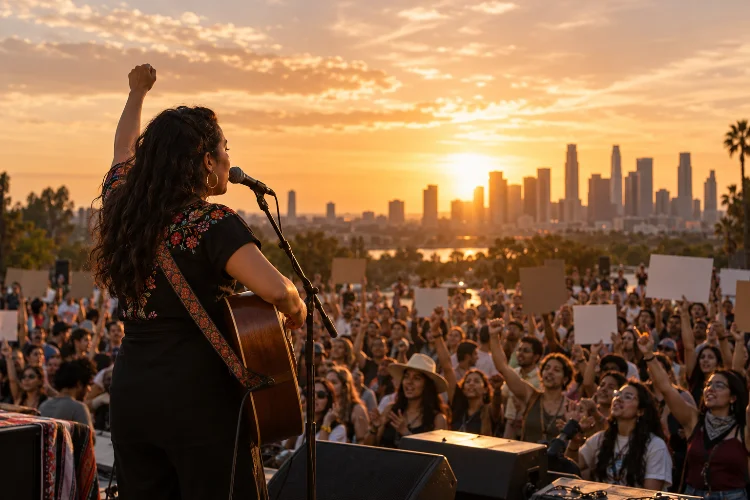
Music has never existed in a cultural vacuum. Songs are created by people living through political tension, social change, inequality, migration, war, protest, and shifting ideas about identity.
That is why some of the most important developments in modern music cannot be explained only through technology or genre trends.
Understanding how social movements influenced the development of modern music means looking at the communities behind the sound.
The Civil Rights Movement transformed gospel, folk, jazz, and soul into powerful vehicles for collective action. Anti-war movements gave protest songwriting new visibility, while feminist punk challenged who was allowed to speak, perform, and control the stage.
Black and queer club communities helped shape disco and house music. Hip-hop emerged as another way of documenting urban life, inequality, and resistance.
These movements did not simply provide lyrical themes. They changed performance spaces, artist identities, production styles, audience relationships, and the meaning of music itself.
In many cases, a song became more than entertainment. It became a tool for organizing, remembering, protesting, and imagining a different future.
The Civil Rights Movement Made Music Part of Collective Action
Few examples show the connection between music and social movements more clearly than the American Civil Rights Movement.
During the 1950s and 1960s, activists used spirituals, gospel, folk, blues, and rhythm and blues as sources for freedom songs.
The Library of Congress documents how these songs were performed during marches, mass meetings, demonstrations, and even periods of imprisonment.
Songs such as “We Shall Overcome” were not simply performed for an audience.
People sang together.
That difference mattered because group singing created emotional strength and solidarity. Activists facing violence, arrests, intimidation, and uncertainty could use familiar melodies to maintain courage.
The movement also influenced professional musicians.
Jazz artists responded directly to demands for racial equality. Max Roach’s We Insist! Freedom Now Suite, recorded in 1960 with Abbey Lincoln and other musicians, became one of the clearest musical responses to the struggle.
Civil rights activism helped make political expression an increasingly visible part of jazz, soul, folk, and later popular music.
Anti-War Movements Expanded the Protest Song
The 1960s also brought intense opposition to the Vietnam War.
Folk music was already connected to political organizing, but anti-war activism gave the protest song a huge new audience.
Artists including Pete Seeger and Bob Dylan became strongly associated with songs questioning war, political authority, and social injustice.
Library of Congress material on the Vietnam era highlights songs such as Dylan’s “Masters of War” and Seeger’s “Waist Deep in the Big Muddy” as important examples of the period’s anti-war culture.
The influence spread far beyond folk.
Rock musicians increasingly treated albums and concerts as spaces for political commentary. Songwriters discovered that commercially successful music could also criticize governments, war, inequality, or national myths.
That idea remains important today.
Modern artists addressing climate change, conflict, policing, or economic inequality are working within a protest-song tradition that became especially visible during this era.
Social activism helped make disagreement itself a legitimate subject for mainstream popular music.
Black Power Changed the Sound of Identity and Pride
The Civil Rights Movement was followed and overlapped with more assertive forms of Black political and cultural expression.
Music increasingly emphasized pride, independence, African heritage, self-determination, and resistance to racist institutions.
This cultural shift influenced soul, funk, jazz, and eventually hip-hop.
Artists no longer needed to separate entertainment from statements about identity.
The change could be heard not only in lyrics but also in fashion, album artwork, instrumentation, performance style, and ideas about artistic control.
The Black freedom struggle also encouraged musicians to think more deeply about ownership and representation.
Who controlled the record company? Who owned the master recordings? Which audiences were artists expected to satisfy?
These questions would remain important for later generations of Black musicians.
Music became a space where cultural identity could be publicly celebrated rather than softened for mainstream acceptance.
That sense of resistence continues to shape contemporary R&B, rap, jazz, and experimental music.
Queer and Black Club Culture Helped Create Disco and House
Social movements do not always look like marches.
Sometimes cultural change happens on a dancefloor.
Disco developed partly within underground Black, Latino, and gay club communities during the late 1960s and 1970s.
Smithsonian notes that these spaces provided marginalized groups with new forms of social freedom and helped establish the culture that later became mainstream disco.
The political dimension was not always explicit in the lyrics.
Simply creating spaces where people could dance, express sexuality, experiment with fashion, and build community could itself be culturally significant.
After disco faced a major commercial backlash, its musical ideas did not disappear.
Chicago’s house scene grew from many of the same traditions.
GRAMMY.com’s history of house emphasizes its Black and queer roots and the role of clubs such as the Warehouse, where Frankie Knuckles helped develop a new style using disco records, edits, drum machines, and electronic production.
Modern electronic dance music still carries that history, even when festival audiences may not know where the sound began.
Feminist Movements Changed Who Could Control the Stage
Gender politics also transformed modern music.
Women had always been central to popular music, but sexism within the music business often restricted their creative control, industry authority, and access to certain genres.
The feminist punk movement known as Riot Grrrl challenged those assumptions directly during the early 1990s.
Bands such as Bikini Kill combined punk with explicitly feminist ideas about sexism, sexual violence, representation, and female participation in underground music.
The movement also built its own media ecosystem through zines, photocopied publications, letters, shows, and informal networks.
Smithsonian describes Riot Grrrl as an underground feminist punk movement connected to the phrase “girl power,” while also highlighting its strong DIY mentality.
This mattered because Riot Grrrl challenged the idea that women had to wait for mainstream music institutions to represent them fairly.
They could create their own scene.
That DIY attitude influenced later indie artists, queer musicians, feminist pop, and online creative communties.
Hip-Hop Turned Local Experience Into Political Storytelling
Hip-hop emerged from Black and Latino communities in New York during the 1970s and later became one of the world’s dominant musical forms.
Although hip-hop includes many subjects beyond politics, social commentary has been part of the genre from early on.
The Library of Congress describes rap as drawing from long African American traditions while highlighting artists such as Grandmaster Flash, Public Enemy, and N.W.A. as examples of music grounded partly in social protest.
Hip-hop gave artists new ways to describe experiences that mainstream media often ignored.
Housing inequality, policing, poverty, racism, violence, neighborhood life, and political frustration could become direct lyrical material.
The production style also reflected the culture.
Sampling allowed musicians to reuse and reinterpret older recordings, connecting new political messages with earlier generations of Black music.
Over time, hip-hop proved that local storytelling could become global.
A rapper could describe one neighborhood in extraordinary detail and still connect with audiences thousands of miles away.
That ability remains one of modern music’s most powerful forms of social documentation.
Social Movements Also Changed Music Communities and Business Models
The influence of activism goes beyond song lyrics.
Social movements have changed who gets access to stages, studios, labels, clubs, festivals, and media coverage.
Punk’s DIY culture encouraged independent labels and self-organized venues. Feminist movements pushed conversations about gender representation. LGBTQ+ communities created club scenes where new electronic genres developed.
Civil rights activism also challenged segregation within the entertainment business.
These changes affected the structure of music itself.
When new communities gain access to production tools and performance spaces, new sounds often follow.
The relationship works both ways.
Music can support a movement, while the movement creates the social conditions for different artists to be heard.
This is why the history of modern genres is often inseparable from the history of the people fighting for cultural visiblity.
Protest Music Continues to Evolve in the Digital Era
Social media has changed how political music spreads, but it has not removed its importance.
A protest song once traveled through rallies, radio broadcasts, concerts, physical records, and word of mouth.
Today, music can spread through TikTok videos, livestreams, playlists, hashtags, and user-generated clips within hours.
That speed allows songs to become connected with movements even when the artist did not originally write them for that purpose.
Older songs can also return.
A track recorded decades earlier may suddenly gain new meaning because listeners associate it with a current political moment.
At the same time, digital platforms allow artists outside major record labels to respond quickly to events.
A musician can write, record, and distribute a politically charged song without waiting for a traditional release campaign.
The tools are different, but the basic function remains familiar.
Music still helps people express anger, grief, solidarity, pride, and hope.
Music Does More Than Reflect Social Change
It is easy to say that music reflects society.
That is true, but incomplete.
Music can also help create social identity.
A movement needs language, symbols, rituals, meeting places, and shared emotions. Songs can provide all of those things at once.
A chorus can become a slogan. A concert can become a gathering place. A genre can provide a community with a shared cultural identity.
This is why music repeatedly appears during moments of political and social transformation.
It gives abstract ideas an emotional form.
People may disagree about policy documents, but thousands of voices singing together create a different kind of experience.
That emotional power helps explain why social movements have influenced music so deeply – and why musicians continue returning to activism whenever society enters a period of major change.
Social movements have shaped modern music by changing both what artists sing about and the cultural spaces where music is created.
The Civil Rights Movement transformed freedom songs, jazz, soul, and folk. Anti-war activism strengthened protest songwriting.
Black liberation movements influenced funk, jazz, and hip-hop, while feminist punk challenged gender barriers. Black and queer club communities helped build disco and house music into global traditions.
These histories remind us that genres are never only collections of sounds.
Next time you hear a protest lyric, house beat, political rap verse, or fiercely independent punk track, look at the social history behind it. The music may reveal much more than artistic style—it may show how communities used sound to demand change.