Album Sequencing in Streaming Culture: How Track Order Has Evolved
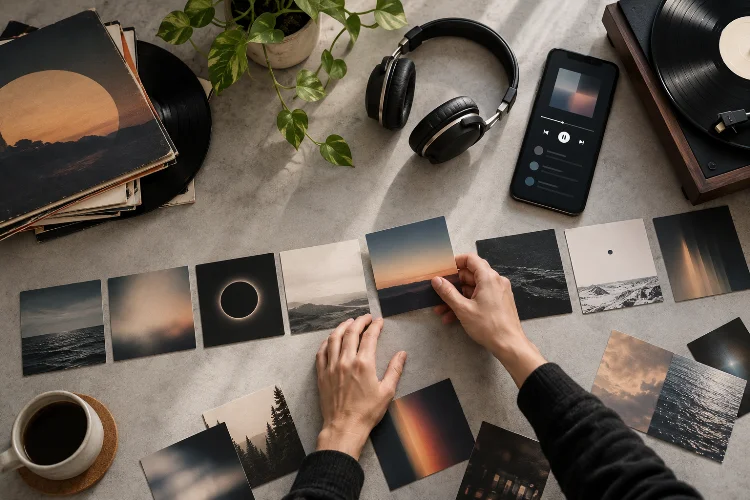
There was a time when listening to an album usually meant starting with track one and letting the record play. Today, a listener might discover track seven through a playlist, save track three after hearing it on social media, and never reach the closing song at all.
That change has completely transformed the role of track order.
Understanding album sequencing in streaming culture means looking at the tension between artistic intention and modern listening habits. Musicians still spend serious time deciding which song should open an album, where the emotional peak belongs, and how the final track should feel.
Meanwhile, streaming platforms make it incredibly easy to skip, shuffle, repeat, or remove songs from their original context.
Yet album sequencing has not disappeared. If anything, it has become more strategic. Artists now have to create a satisfying full-length journey while recognizing that every individual song may eventually live independently inside playlists, recommendations, and algorithmic feeds.
Album Sequencing Started With Physical Limitations
Album sequencing originally developed partly because physical formats imposed real restrictions.
When Columbia introduced the 12-inch microgroove LP in 1948, the format could hold roughly 23 minutes of music on each side. Artists and producers therefore had to think about two separate listening sections rather than one endless sequence.
That physical structure influenced creative decisions.
The first song on Side A needed to introduce the record effectively, while the final song before listeners flipped the record often worked as a miniature ending. Side B then created another beginning and another closing moment.
This encouraged a kind of musical architecture.
Producers considered tempo, mood, dynamics, and how one track would emotionally prepare listeners for the next. Sequencing was not merely administrative; it became part of the artistic process.
CDs Made Sequencing More Flexible
The CD removed many of vinyl’s physical constraints.
Artists could create longer albums without dividing them into two obvious halves. Listeners could also jump directly to specific track numbers instead of physically moving a needle across a record.
Even so, album order remained important.
Producers continued thinking about opening tracks, emotional pacing, transitions, and closers. Mastering engineers also considered how songs sounded beside one another rather than treating each recording completely independantly.
Sound On Sound notes that mastering an album involves judging songs in context, including tonal balance, pacing, transitions, and how one track prepares the listener for what follows.
The technology had changed, but the idea of an album as a journey remained.
Streaming Broke the Connection Between Album and Listening Order
Streaming created a much bigger disruption.
Instead of buying one record and repeatedly hearing its tracklist, listeners gained instant access to millions of songs. Playlists, recommendations, artist radio, search results, and social-media discovery made the individual track far more independent from its parent album.
That matters because streaming is now the dominant recorded music format. IFPI reported that streaming generated 69.6 percent of global recorded music revenue in 2025, with total streaming revenues exceeding $22 billion.
The album therefore exists inside a listening environment where audiences are constantly being offered alternatives.
A weak transition is no longer followed simply because turning off a CD feels inconvenient. One tap can send the listner somewhere else entirely.
The First Few Tracks Have Become More Important
The streaming era has encouraged another major change: front-loading.
Traditionally, an artist might save a major song for later in the record to create anticipation. Streaming gives artists more incentive to place immediately engaging material near the beginning.
Listeners can skip quickly, and songs frequently compete for attention with enormous catalogs of other music. Industry commentary has consequently linked streaming behavior and skip rates with pressure to put catchy, accessible material earlier in album sequences.
The Opener Now Has Two Jobs
A modern album opener often has to work as both an introduction and a standalone song.
It needs to establish tone for dedicated fans listening from beginning to end, but it may also need enough immediate personality to survive outside the album.
This does not mean every project begins with its biggest single.
Some artists deliberately open with atmospheric introductions or slower tracks because they prioritize narrative. The difference is that doing so now feels like a more conscious artistic choice in a stremaing environment built around quick discovery.
Shuffle Culture Challenged the Artist’s Intended Narrative
Perhaps no feature symbolizes the sequencing debate better than shuffle.
Shuffle gives listeners control, but it can completely change an album designed around emotional progression, lyrical storytelling, or musical transitions.
The issue became particularly visible in 2021 following the release of Adele’s 30. Adele argued publicly that artists carefully construct track listings because albums tell stories, after which Spotify changed its Premium album experience so the main play button no longer defaulted to shuffle.
Listeners can still shuffle albums today, and Spotify’s current support documentation describes shuffle as an optional playback mode.
That episode highlighted an important point: technological convenience and artistic intention do not always want the same thing.
Playlists Have Created a Second Type of Sequencing
Streaming did not actually destroy sequencing. It created another version of it.
Playlist curators also think carefully about song order.
A workout playlist might gradually increase energy. A late-night playlist might avoid sudden jumps in tempo. Editorial playlists need tracks to feel natural beside artists who may never have worked together.
In that sense, sequencing has moved beyond the album.
The difference is ownership. In an album, the artist controls the musical journey. In a playlist, that context can be controlled by a platform, curator, algorithm, or individual listener.
A song therefore needs to function in multiple environments.
It might be track eight inside an emotional album narrative while simultaneously becoming track two on someone’s morning playlist.
Artists Still Use Sequencing to Tell Stories
Despite streaming’s emphasis on individual tracks, many musicians continue treating sequencing as a storytelling tool.
Jimmy Jam has described album sequencing as similar to reading a book, pointing to the importance of arranging tracks and interludes so that an album develops as one continuous thought.
This philosophy is especially obvious in concept albums, hip-hop records with skits, continuous electronic albums, and projects built around emotional transformation.
A song can take on a completely different meaning depending on what comes before it.
An upbeat track following a sad song might feel like recovery. Put the same song after an aggressive track and it could sound like relief. Context changes interpretation.
That is why sequencing remains one of the most invisible but powerful tools in album production.
Modern Albums Must Work in Two Ways at Once
The biggest challenge for contemporary artists is designing music for two listening modes.
The first is the traditional album experience: track one through the ending, exactly as intended.
The second is fragmented listening, where songs exist separately through search, playlists, social media, recommendations, and shuffle.
Successful albums increasingly accommodate both.
Tracks can stand alone without feeling meaningless outside the record, while the complete sequence rewards listeners who stay for the entire journey.
Spotify itself continues developing album-release tools such as Countdown Pages. The company has reported that, on average, more than 80 percent of users who pre-save an upcoming release through the feature stream that release during its first week.
That suggests the album release still has value even when individual songs dominate discovery.
The modern challenge is not choosing between songs and albums. It is designing for both.
Sequencing May Be More Creative Because It Is Optional
Interestingly, streaming may have made thoughtful sequencing more meaningful.
When listeners were forced by a physical format to hear songs in order, following the sequence required little commitment. Today, listeners choose whether to experience the record that way.
That gives artists an opportunity.
Smooth transitions, recurring musical themes, surprising track placements, interludes, narrative callbacks, and powerful closers can reward people who resist shuffle.
The result is almost like an extra layer of content.
Casual listeners get individual songs. Dedicated listeners discover the larger structure behind them.
So while modern technology has weakened the practical necessity of sequencing, it may have strengthened its creative purpose.
Album sequencing has evolved from a necessity of physical formats into a strategic and artistic choice shaped by streaming culture.
Vinyl encouraged two-sided structures, CDs increased flexibility, and streaming gave listeners almost total control over how and where they hear individual songs.
Yet track order remains far from irrelevant.
Modern artists now have to balance strong opening tracks, playlist-friendly songs, narrative pacing, smooth sequncing, and memorable endings while knowing listeners may never hear the project exactly as intended.
The next time you discover an album through one favorite song, try returning to track one and listening straight through. Pay attention to the transitions, energy changes, and placement of each song. You may find that the tracklist itself is part of the music.